Join 50,000+ subscribers for German recipes, stories, traditions, & more!
Join 50,000+ subscribers for German recipes, stories, traditions & more!
- Home
- German Pork Recipes
- German Schnitzel Recipe
Oma's German Pork Schnitzel (Schweineschnitzel)

by: Gerhild Fulson / Oma Gerhild shares German recipes rooted in family tradition.
Updated: February 15, 2025
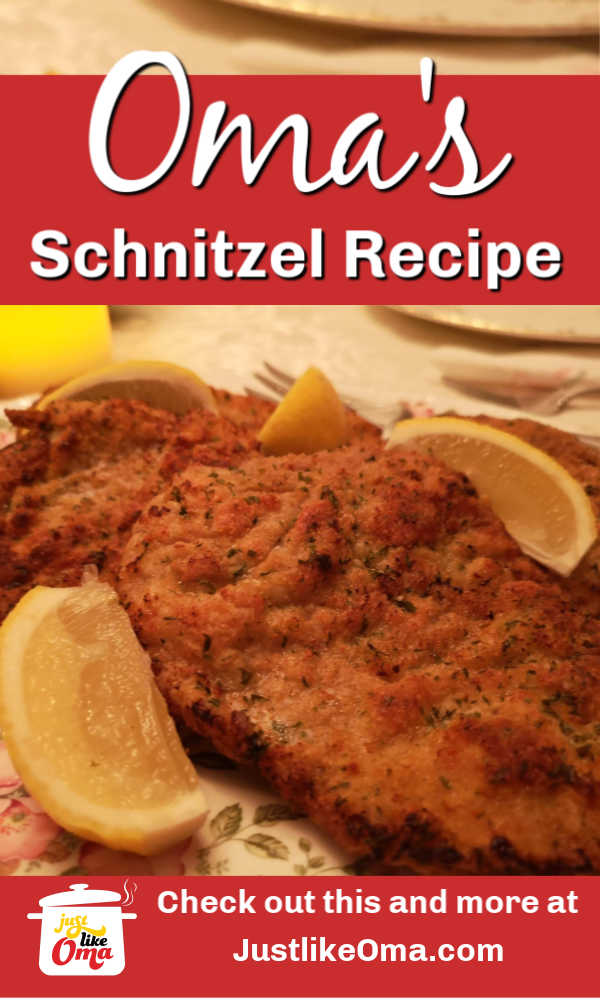
Schnitzel is easier than you might think. My German schnitzel recipe turns thick, boneless pork chops into crispy, golden schweineschnitzel (pork schnitzel) in under 30 minutes.
Find this recipe in this cookbook!
Along with over 2 dozen other simple & delicious German meat recipes, made for today's cook, and today's busy kitchen.
Get the cookbook >
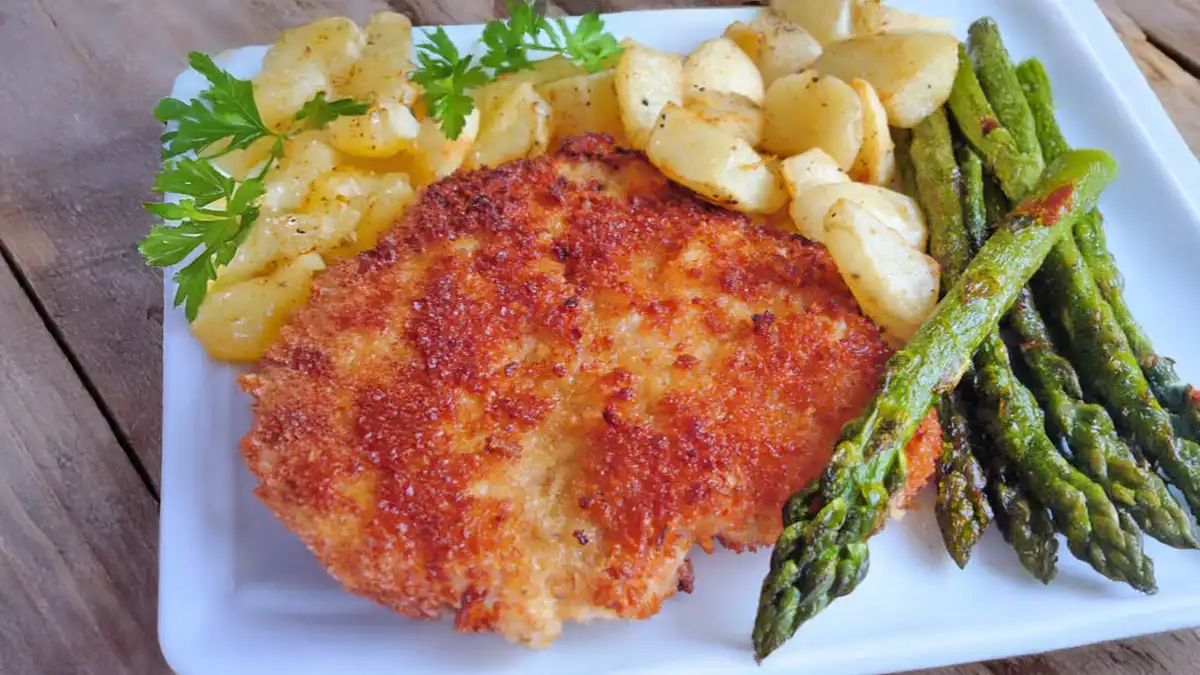
Pork is the schnitzel you’ll find most often in Germany. I pound it thin and bread it in flour, egg and crumbs. Then it fries in butter and oil. Splash a little of that hot fat over the top while it fries, and the crust puffs right up. Mega lecker!
Schnitzel is really just thin cutlets and can be made with just about any kind of meat. You can have veal schnitzel (also known as wiener schnitzel), pork schnitzel (which is most common in Germany), chicken schnitzel, and turkey schnitzel, among many others. The meat is pounded thin with a meat tenderizer, then breaded and fried.
Oma’s Recipe Rundown
- Ease of Making: Straightforward; perfect for both beginners and experienced cooks
- Taste: Tender pork with a crispy, golden crust
- Time: Ready in about 30 minutes
- Best Served With: Lemon wedges, red cabbage, potato salad, or spätzle
Top Tips For Best Results
- Pound Evenly: Pound the meat evenly to about ¼ inch (0.6 cm) thick for uniform cooking.
- Oil Temperature: Heat oil to 330-350°F (165-175°C). Too hot, and the crust burns; too cool, and it becomes greasy.
- Don't Overcrowd: Fry one or two pieces at a time to maintain oil temperature and ensure even frying.
- Draining: Place cooked schnitzels on a wire rack to keep the crust crisp.
- Gluten-Free Hack: Use gluten-free breadcrumbs and flour.
One of the most popular traditional recipes is the German recipe for jägerschnitzel (Hunter's schnitzel). This is schnitzel served with a wonderful mushroom sauce.
Jägerschnitzel is sometimes made with unbreaded meat, making it a quicker and easier version than the breaded one.
For a cheesy twist, top it like my Hawaiian chicken schnitzel.
You choose your fave. My favorite German recipe? Definitely the breaded version. It's German food at its best!
Top 10 Schnitzel Variations In Germany
- Jägerschnitzel (Hunter’s) is topped with a rich mushroom gravy
- Käseschnitzel has cheese melted on top
- Münchner schnitzel is covered with horseradish and/or mustard before coating in flour, egg, and bread crumbs
- Naturschnitzel is unbreaded, served plain or with a simple pan sauce
- Paprikaschnitzel has a tomato sauce with paprika and red peppers
- Rahmschnitzel is topped with a cream sauce, often containing some mushrooms
- Schnitzel Holstein is served with onions, capers, and a fried egg on top
- Vegetarisches schnitzel is meatless and made from soy or tofu
- Weiner schnitzel or kalbsschnitzel is the traditional breaded veal schnitzel
- Balkanschnitzel (originally called zigeunerschnitzel) has a sauce containing tomato, bell peppers, and onion slices
What Is Schnitzel?
The definition of schnitzel: a thin slice of meat cutlet, usually tenderized by pounding, coated in flour, eggs, and breadcrumbs, and then pan-fried until perfectly crispy with a deep golden brown crispy breading that covers the tender, juicy meat.
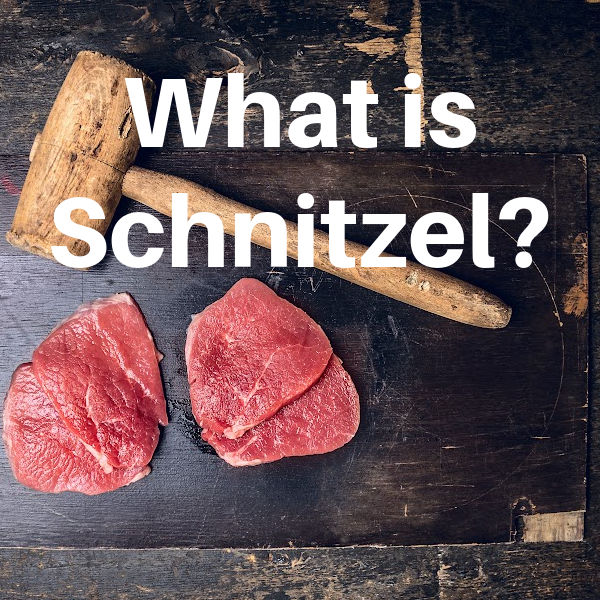
The history of schnitzel spans over 2,000 years and involves the Romans, the Italians, the Austrians, and the Germans.
What Is The Difference Between Schnitzel And Wiener Schnitzel?
The original Wiener schnitzel is thought to have come from Vienna, Austria, in the 1600s. It has to be made from veal and is controlled by Austrian law. It is often considered the national dish of Austria!
In Germany, if it's not made with veal cutlet, it must be labelled as coming from pork or chicken, etc. That means, you'll have schweineschnitzel (pork cutlet) or putenschnitzel (turkey cutlet) on the menu in restaurants.
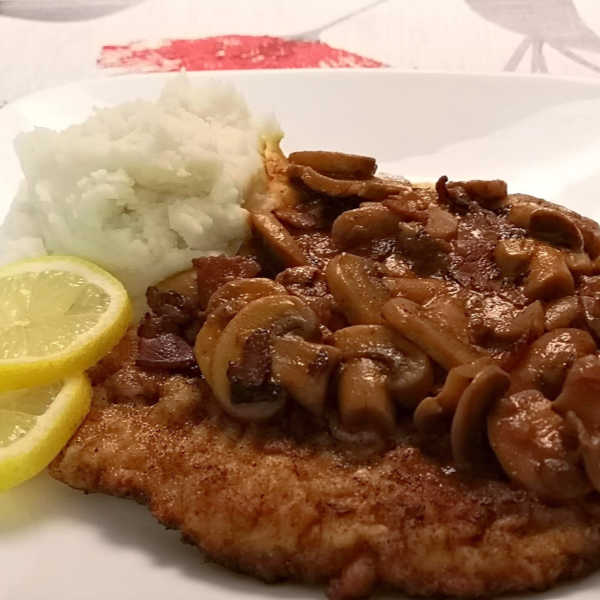
Above, I've topped the breaded pork schnitzel with mushrooms that I've fried with bacon and onions. A delicious dish!
From Oma's heart to your table
Complete your set today - order now!

Turn Boneless Pork Chops Into Schnitzel
(Find the printable recipe with measurements in the recipe card below.)
I use thick, boneless pork chops and turn them into schnitzel. This method also works well with chicken breast. First, I trim off the fat that's usually around the outer edge. Make sure you take off any silver skin that may also be along the edge.
If this fat isn't removed, it will cause the schnitzel to curl when it is frying.
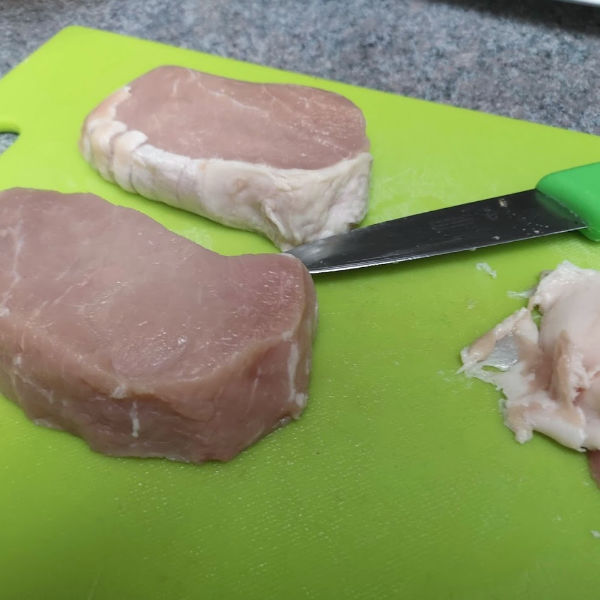
Butterfly the pork chop: Use a very sharp knife and cut the pork chop in half, almost all the way through.
If you cut starting on the rounded side edge, you'll have the longer straight edge as the butterfly back.
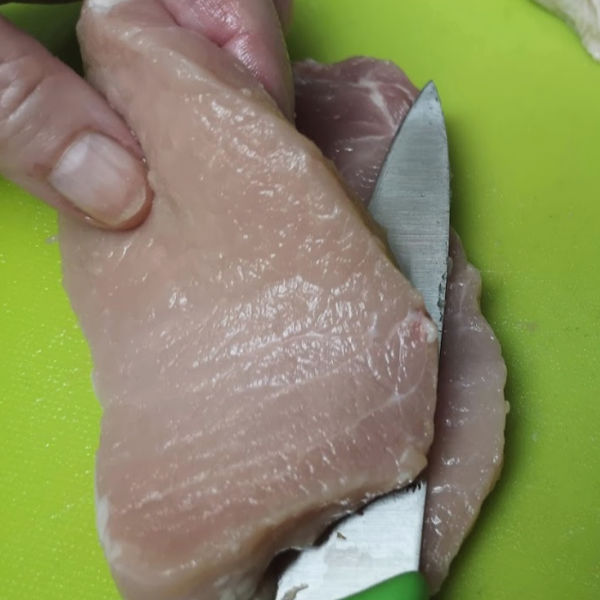 This step shows how to carefully butterfly the pork chop. An important step in making pork schnitzel.
When you are almost all the way through, open the pork chop (like a book). You should be able to lie it flat. The middle part should be as thick as the rest of the pork chop.
If the middle is much thicker, cut it just a bit more. Flatten the meat.
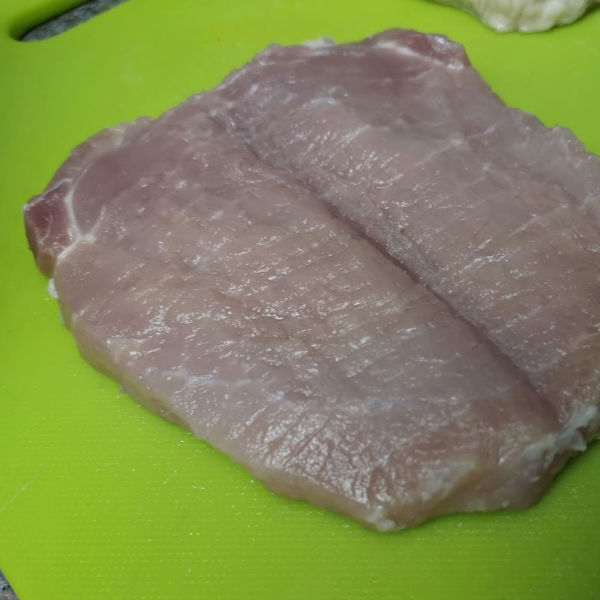
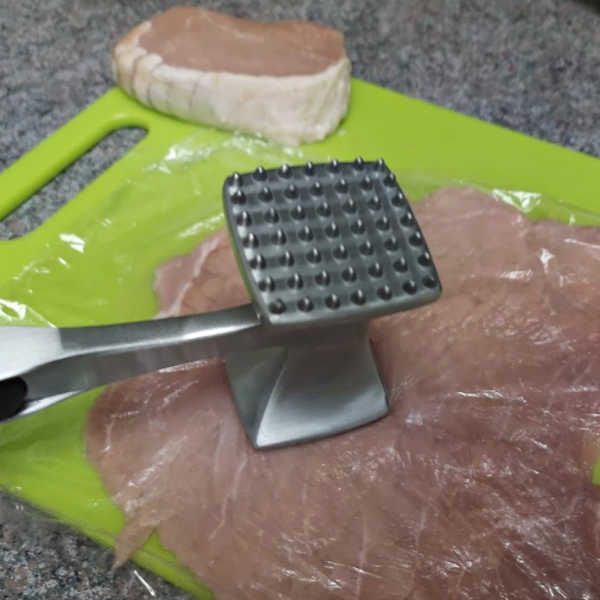
Cover the meat with some plastic wrap, and using the flat side of a meat mallet, pound the pork chop sort of gently. You do not want the meat to tear.
You want the schnitzel to be no more than ¼-inch thick.
Set up three shallow dishes. The first has about half a cup of flour, the second an egg/water mix, and the third has about 1 cup (approx. 108 grams) of bread crumbs.
Season the schnitzel with salt and lemon juice, then dredge it in the flour, then the egg, and lastly in the bread crumbs. Repeat this whole process with all the schnitzel.
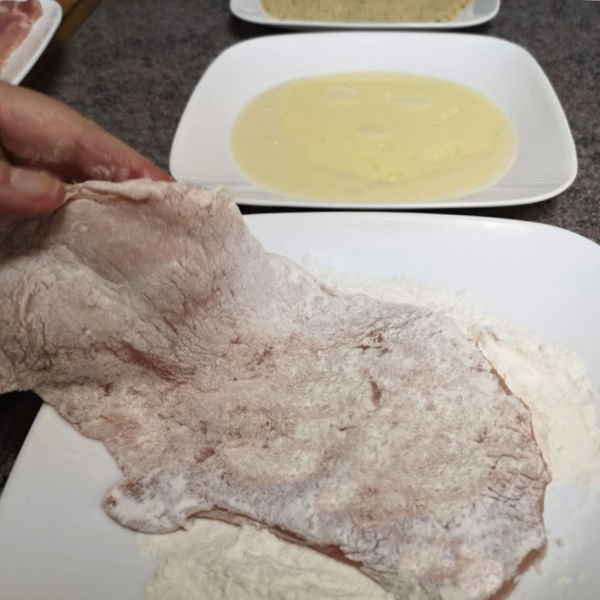
In a large frying pan, fry the tender cutlets in 3 tablespoons (42 grams) of butter and 3 tablespoons (approx. 44.3 milliliters) of cooking oil. Each side only takes a few minutes. Remove to a wire rack on a baking sheet and then keep warm in the oven until the rest have been fried.
Be careful not to crowd them in the pan. You may only be able to fry one at a time, depending on how big your schnitzels are. Mine below is quite big!
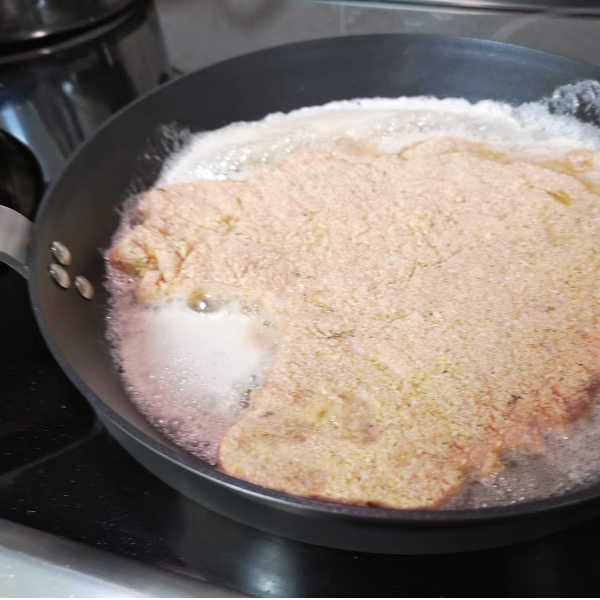
Even though schnitzels aren't deep-fried, they pretty well swim in the fat.
The trick to getting a puffy batter is to baste some of the hot fat onto the sides and top of the schnitzel as it's frying.
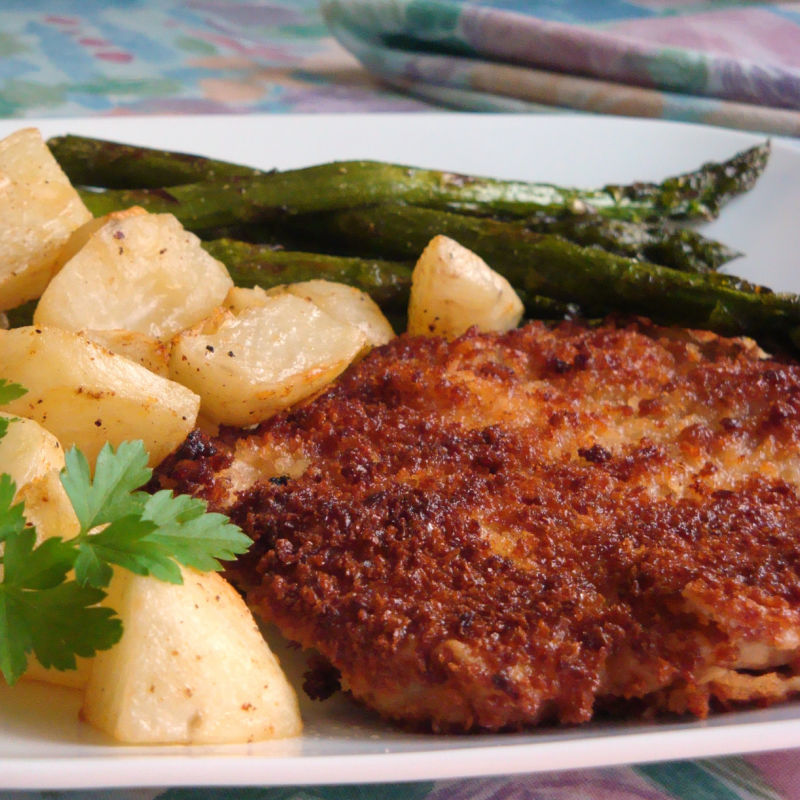
Oma Says
Have you wondered if you can make schnitzel in an air fryer? Yes, you can. My granddaughter, Lydia, makes these in an Instant Pot Vortex Plus Air Fryer using her easy recipe. She loves trying out the air fryer for German recipes!
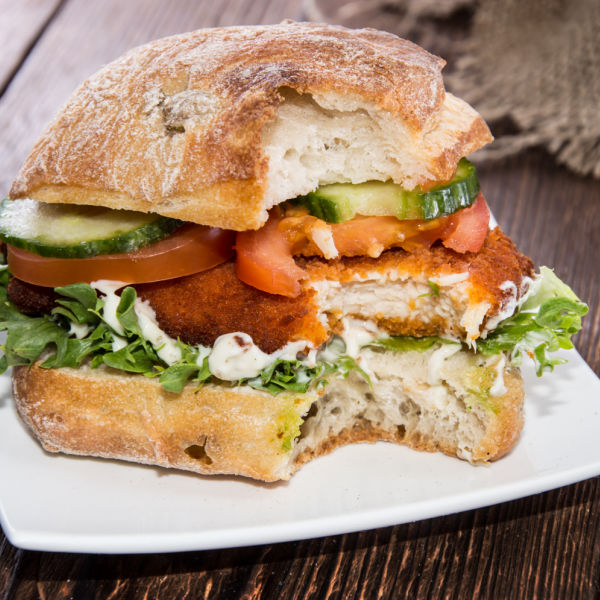
Served together with a slice of lemon and her favorite red cabbage as a side dish, this crispy German pork schnitzel recipe would also make a great sandwich on a German bun. So traditionally German.
What To Serve With Schnitzel
There are SO many ways to serve schnitzel! If you want a traditional German dinner, there are several side dishes that are a MUST! Here are some faves:
- Spätzle: German egg noodles that soak up any gravy.
- Rotkohl (red cabbage) and kartoffelsalat (southern German potato salad) on the side.
- Rahmwirsing (creamed cabbage) is a perfect comfort side dish
- Gurkensalat (cucumber salad) is a refreshing side.
- Bratkartoffeln (fried potatoes) or pomme frites (French fries) with lingonberry jam! Wunderbar!
- Serve in a brötchen (bun).
- Check out these Top 10 side dishes to serve with schnitzel.
Schnitzel, served any which way, is just plain WUNDERBAR!

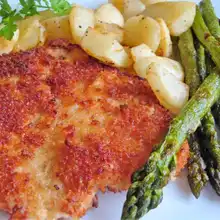
German Schnitzel Recipe: Oma's Classic Schweineschnitzel
Oma’s simple German schnitzel recipe is a family favorite! Pair it with rich jägersoße for a truly traditional meal. Use veal for Wiener Schnitzel or pork for an easy, delicious alternative!
Prep Time:
15 minutes
Cook Time:
12 minutes
Total Time:
27 minutes
Servings:
4 servings
Ingredients:
- 4 large pork cutlets, about ¼-inch thick or less
- 1 tablespoon (15 milliliters) lemon juice
- ½ teaspoon (3 grams) salt
- about ½ cup (65 grams) all-purpose flour
- 3 tablespoons (45 milliliters) water
- 1 large egg
- about 1 cup (about 150 grams) breadcrumbs
- 3 tablespoons (42 grams) butter
- 3 tablespoons (45 milliliters) peanut or vegetable oil
- 1 lemon, sliced
Instructions:
- Preheat the oven to 160°F (70°C). Place a wire rack on a large baking sheet. Put a double layer of paper towels on a large plate. Set these aside.
- Place cutlets between plastic wrap and pound gently to achieve uniform thickness if they are thicker than ¼-inch. Sprinkle both sides with lemon juice and salt.
- Place 3 shallow bowls onto the counter. In the first one, put flour. In the second one, mix the egg and milk. In the third one, put the breadcrumbs.
- Dredge a cutlet in flour, shaking off excess. Dip into the egg mixture, ensuring full coverage. Press into breadcrumbs, coating evenly. Place onto a large plate and repeat with the remaining cutlets.
- In a large skillet, melt butter and oil over medium heat until shimmering
- Place cutlets in the pan without overcrowding. Fry until golden brown, about 2-3 minutes per side. Depending on the size, you may only be able to fry 1 or 2 at a time.
- Remove the cooked schnitzel very briefly to the paper towel-lined plate to drain any fat, and then place it on the wire rack on the baking sheet in the oven to keep warm.
- Fry the remaining cutlets.
- Serve immediately, garnished with lemon slices or lemon wedges.
Notes/Hints:
- If you are serving this as jagerschnitzel, you'll want to make the mushroom sauce first and then fry the schnitzel.
- When breading meat, make sure you first pat the meat dry with paper towels so that the flour will stick properly.
- If you want to make this non-breaded, then just dredge in the flour and omit the egg/milk and breadcrumbs.
* * * * *
Unless otherwise noted recipe, images and content © Just like Oma | justlikeoma.com
Recipe Update: February 15, 2025
Schnitzel FAQ
How do I keep my schnitzel from getting soggy?
How do I keep my schnitzel from getting soggy?
Make sure your oil/butter is hot enough (around 330-350 degrees F). Also, don't overcrowd your pan, as it will reduce the oil temperature.
How do I make the crust of my schnitzel crispy?
How do I make the crust of my schnitzel crispy?
When you pat the schnitzel dry, making sure all excess moisture is removed; this will help make it crispy. Then dip it first in flour, then in beaten eggs, then in breadcrumbs for the perfect coating.
Why is my schnitzel tough or chewy?
Why is my schnitzel tough or chewy?
The meat for schnitzel needs to be thin. If the meat is thick, it may result in a tough schnitzel. Pounding the meat thinly and evenly before cooking will solve the issue.
My schnitzel falls apart while cooking.
My schnitzel falls apart while cooking.
Make sure to press the breadcrumbs into the meat to ensure it adheres properly. Remember the flour-egg-breadcrumb sequence to create a strong coating.
What kind of breadcrumbs should I use?
What kind of breadcrumbs should I use?
Dry breadcrumbs are ideal for schnitzel. They create a crispy texture. Some prefer to use Panko breadcrumbs for extra crunch.
Should I use oil or butter for frying my schnitzel?
Should I use oil or butter for frying my schnitzel?
It depends on your preference. Both oil and butter work fine, though butter can burn easily so be careful. You can also use a mix of both, my favorite.
What is the correct temperature for cooking schnitzel?
What is the correct temperature for cooking schnitzel?
The oil/butter temperature should be around 330-350 degrees F. If you don't have a thermometer, insert a wooden spoon in the oil, if bubbles form around it, the oil is hot enough.
What kind of meat should I use for making schnitzel?
What kind of meat should I use for making schnitzel?
Traditionally, schnitzel is made from pork or veal, but you can also use chicken or turkey.
Comments? Questions?
You can leave a comment about this recipe or ask a question...
Pop right over to my private Facebook group, the Kaffeeklatschers. You'll find thousands of German foodies, all eager to help and to talk about all things German, especially these yummy foods.
Meet with us around Oma's virtual table, pull up a chair, grab a coffee and a piece of Apfelstrudel, and enjoy the visit.
Recent Articles


-
Sauerbraten
Oct 15, 26 07:54 AM
My grandmother always made Sauerbraten but did not leave a recipe. I tried for many years to find one that tasted like hers. Loads of expriements until -
Cucumber and Dill Pickle Salad (Gurkensalat mit Gewürzgurken)
Sep 27, 26 01:04 AM
 This cucumber salad with pickles is creamy, crunchy, and full of fresh flavor. It makes an easy side dish that pairs perfectly with your favorite German-inspired meals.
 -
Cream of Mushroom Soup Recipe – Oma's Champignon-Cremesuppe Rezept.
Sep 27, 26 12:27 AM
 Looking for cream of mushroom soup recipe? Here's a quick one that's so delicious. AND, a super quick one you'll love to make!
Words to the Wise
"The words of the godly are a life-giving fountain; the words of the wicked conceal violent intentions."
Proverbs 10:11 (NLT)
Let's connect...

From Oma's heart
to your table
Complete your set today - order now!



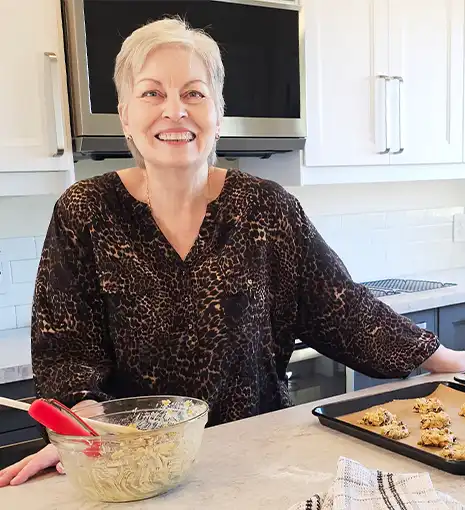
Hi, I'm Oma Gerhild! As a food writer and cookbook author, I'm always looking to find ways to pass on my German heritage using local ingredients. Quick and easy. That's my goal. Wunderbar food. That's the result.
What others are saying about Oma's cookbooks
As a German-American that is a bit culinarily challenged, this book is a true blessing...
This classic cookbook (German Meals at Oma's) has not only a variety of different recipes, but also key notes to help even those with little experience in the kitchen learn to make excellent German cuisine.
Erika Neumayer Ehrat, Owner & designer of Rare Dirndl

Discover our Just Like Oma family of websites:




Across media platforms, the Just Like Oma family of websites are celebrated for making German cooking, travel, and heritage fun & simple to understand, and easily accessible for everyone!






















%0Ahttps%3A%2F%2Fwww.quick-german-recipes.com%2Fgerman-schnitzel-recipe.html%0A%23germanfood%20%23justlikeoma%20%23Jagerschnitzel)



Copyright © | Quick German Recipes (Just like Oma) | A Fulson Media Group Inc. Brand | All Rights Reserved
Powered by: Make Your Knowledge Sell!
AFFILIATE DISCLOSURE: Quick German Recipes is a brand of Fulson Media Group Inc., which participates in various affiliate advertising to provide a means to earn advertising fees by linking to retail websites. Additionally this website is a participant in the Amazon Services LLC Associates Program, an affiliate advertising program designed to provide a means for sites to earn advertising fees by advertising and linking to amazon.com and affiliated sites. We do not promote products we do not own or would not buy ourselves. Our goal is to provide you with product information and our own personal opinions or ideas. At times, we will showcase services, programs, and products. We aim to highlight ones that you might find interesting, and if you buy future items from those companies, we may get a small share of the revenue from the sale. We are independently owned and the opinions expressed here are our own.
PHOTOGRAPHY: Throughout this site, you'll find mostly photos that we've taken in our kitchen(s). We also feature some reader-contributed images and curated stock IMAGES BY Deposit Photos and others, offering further perspectives on recipes and all things German.
YOU SHOULD ALWAYS PERFORM DUE DILIGENCE BEFORE BUYING GOODS OR SERVICES ONLINE.
Quick-German-recipes.com does not sell any personal information
